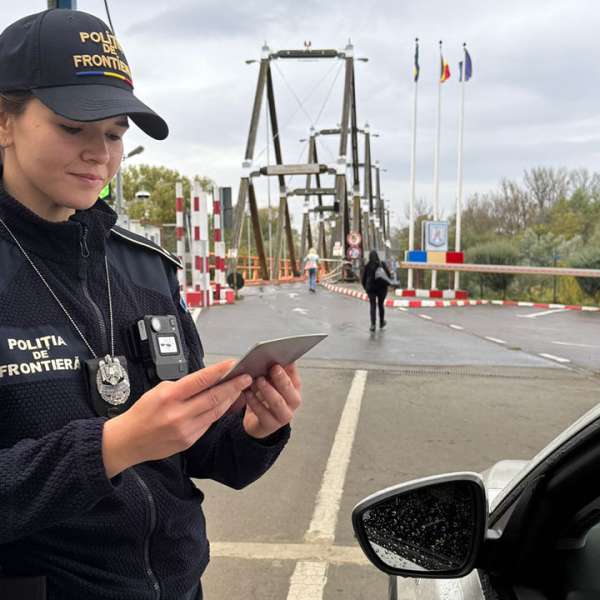
Starting today, April 10, 2026, the Entry/Exit System (EES) has become fully operational across the entire European Union.
In Romania, its implementation was carried out in stages, beginning in October 2025, and as of March 2, 2026, it became operational at all external border crossing points.
We remind that the system applies to citizens of non-European Union countries who carry out short stays of up to 90 days within any 180-day period. The EES electronically records entry and exit data, collects alphanumeric and biometric data – facial image and fingerprints – and automatically calculates the duration of legal stay.
At the first border crossing, the biometric data necessary to create an individual profile are collected, while for subsequent travels, verification is carried out solely based on a biometric identifier (fingerprints or facial image), contributing to reduced waiting times.
Children under 12 years of age, persons for whom this process is not possible, as well as holders of residence permits or long-stay visas issued by European Union Member States are exempted from fingerprint collection.
Where the legal conditions for entry are met, access is granted and electronically recorded, and persons are informed about the authorized duration of stay. Otherwise, refusal of entry is recorded in the system and communicated accordingly.
The collected data is stored for limited periods, in accordance with European data protection legislation, and the data subjects benefit from rights regarding access, rectification, and deletion.
With the implementation of the system at European level, the manual stamping of travel documents has been eliminated, without affecting existing freedom of movement rights.
The full implementation of the Entry/Exit System contributes to streamlining border control, improving the traveller experience, and strengthening the capacity to prevent and combat cross-border crime. At the same time, this approach reinforces Romania’s role in managing the external border of the European Union, in cooperation with European and national institutional partners.